
Transformer Oil Filtration: Restore Dielectric Strength (A-Z)
TRANSFORMER OIL FILTRATION SERVICE (A-Z): RESTORING DIELECTRIC STRENGTH & EXTENDING ASSET LIFESPAN
Transformer Oil Filtration is the critical maintenance process of removing suspended particles, dissolved gases, and moisture from insulating oil to restore its dielectric strength. For electrical engineers and facility managers, this is not merely a cleaning procedure; it is a vital life-extension strategy for high-voltage assets. Neglecting oil quality leads to accelerated insulation degradation, thermal faults, and catastrophic transformer failures.
This comprehensive guide details the technical necessity of high-vacuum filtration, the distinctions between purification and regeneration, and the actionable standards (IEC/IEEE) required to maintain electrical system reliability.
1. The Critical Necessity of Transformer Oil Filtration
Engineering Insight: Mineral insulating oil serves two primary functions: acting as a dielectric medium to prevent arcing and serving as a coolant to dissipate heat. When contaminants compromise these functions, the risk of Partial Discharge (PD) increases exponentially.
Over time, transformer oil degrades due to thermal stress, oxidation, and interaction with internal materials. This degradation introduces three primary enemies to the transformer’s health:
- 1. Moisture Content (Water):
Water is the most destructive contaminant. It enters through breathing (ingress from the atmosphere) or is generated internally as a byproduct of cellulose (paper insulation) degradation.
Impact: Reduces Breakdown Voltage (BDV) significantly. High moisture content accelerates the aging of the solid paper insulation—damage that is irreversible.
- 2. Dissolved Gases:
Thermal faults and electrical stress generate combustible gases (Acetylene, Ethylene, Hydrogen) within the oil.
Impact: Reduces the oil’s insulation capability and can lead to dangerous pressure buildups (Buchholz relay trips). Effective filtration includes degasification.
- 3. Particulate Matter & Sludge:
As oil oxidizes, it forms acidic byproducts and sludge.
Impact: Sludge deposits on the core and windings, blocking cooling ducts. This causes the transformer to run hotter, further accelerating degradation in a vicious cycle known as “thermal runaway.”
2. The High-Vacuum Filtration Procedure (Step-by-Step)
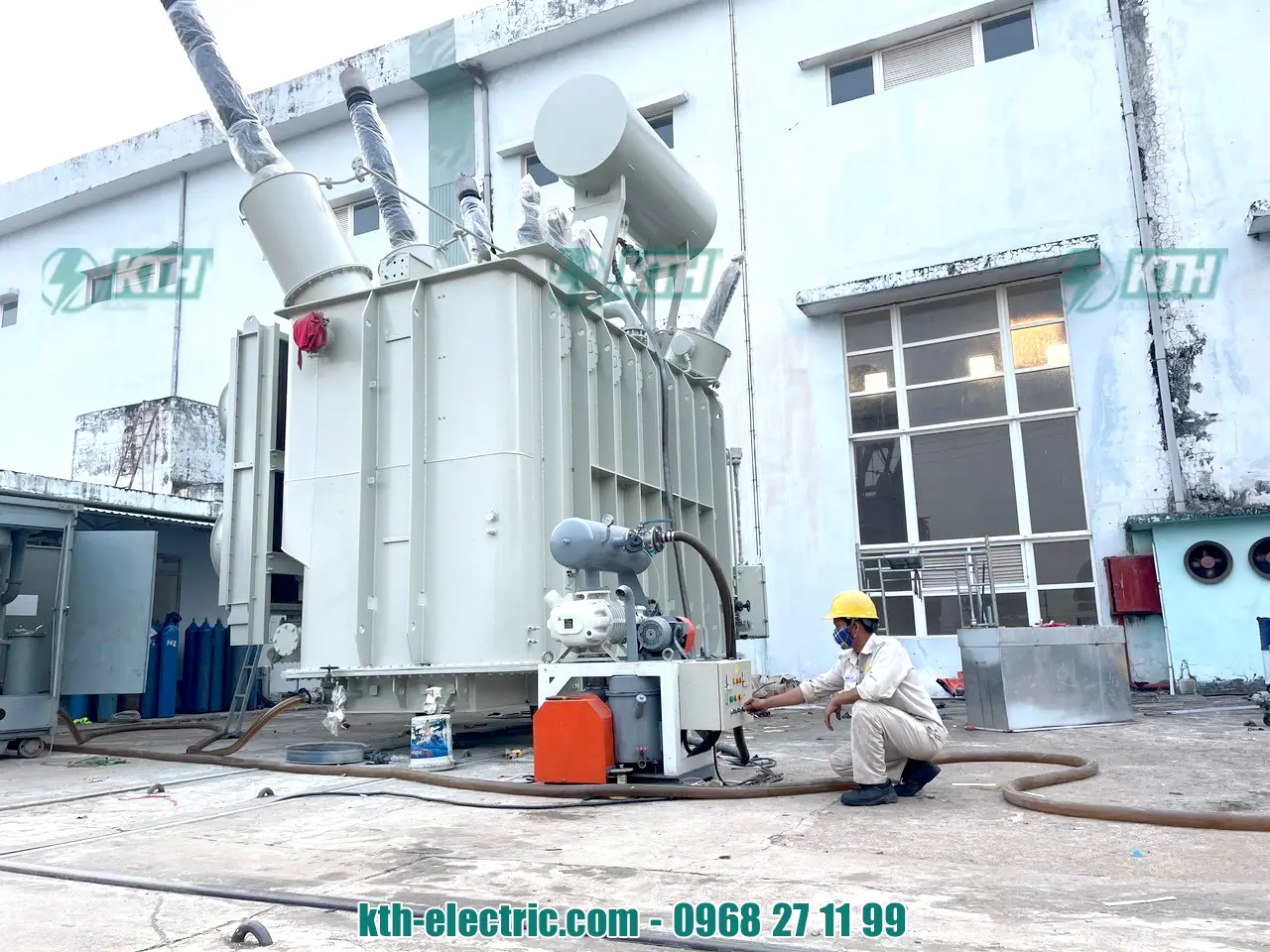
At KTH ELECTRIC, we utilize advanced High-Vacuum Transformer Oil Purification Systems (EHV grade). The process is strictly governed by engineering protocols to ensure the oil is not just “cleaned” but chemically and physically restored.
Phase 1: Pre-Filtration Assessment
Before any machinery is connected, a comprehensive system assessment is mandatory.
- Sampling: Oil samples are drawn according to IEC 60475 standards.
- Lab Analysis: We test for BDV (Breakdown Voltage), Water Content (PPM), Acidity (Neutralization Number), and Interfacial Tension (IFT).
- Decision Gate: If acidity is > 0.15 mgKOH/g, simple filtration is insufficient; Regeneration is required.
Phase 2: The Filtration Cycle
The oil is circulated in a closed loop through the purification plant:
| Stage | Technical Action |
|---|---|
| 1. Inlet & Heating | Oil is drawn into the system and heated to 60°C – 65°C. Heating lowers viscosity, making filtration more efficient, and aids in breaking the moisture-oil bond. Note: Low watt-density heaters are used to prevent thermal cracking of the oil. |
| 2. Preliminary Filtration | Magnetic strainers and coarse filters remove large particles (fibers, metal shavings) larger than 50 microns to protect the vacuum chamber. |
| 3. Vacuum Dehydration & Degasification | This is the core process. The heated oil enters a vacuum chamber (vacuum < 1 mbar). Here, the boiling point of water is drastically reduced, causing dissolved water and gases to flash evaporate instantly, separating them from the oil. |
| 4. Fine Filtration | The dry, degassed oil passes through fine filter cartridges (typically 0.5 to 1 micron) to remove microscopic particulates before being returned to the transformer. |
Phase 3: Post-Filtration Verification
Filtration continues until the outlet oil meets the target criteria. A final set of measurements is taken on-site to verify the transformer maintenance success.
3. Industry Standards: When is Oil “Good Enough”?
Compliance with international standards is non-negotiable. At KTH ELECTRIC, we adhere to IEC 60422 (Supervision and maintenance guide for mineral insulating oils in electrical equipment). Below are the target values for oil after successful filtration/reconditioning:
| Parameter | Unit | Limit (> 72.5 kV to < 170 kV) | Limit (> 170 kV) |
|---|---|---|---|
| Breakdown Voltage (BDV) | kV | > 50 | > 60 |
| Water Content | mg/kg (ppm) | < 10 | < 10 |
| Dielectric Dissipation Factor (DDF) | at 90°C | < 0.1 | < 0.1 |
| Acidity | mgKOH/g | < 0.10 | < 0.10 |
4. Filtration vs. Regeneration: Understanding the Difference
A common misconception in substation maintenance services is that filtration fixes everything. It does not.
Oil Filtration (Purification)
Removes: Water, Gases, and Physical Particles.
When to use: Routine maintenance, when BDV drops, or when moisture is detected. The oil is chemically stable but physically dirty.
Oil Regeneration (Reclamation)
Removes: Acids, Sludge, Polar Compounds, and Oxidation byproducts.
When to use: When oil is dark/cloudy, Acidity is > 0.15 mgKOH/g, or Interfacial Tension (IFT) is < 25 mN/m. This process uses Fuller’s Earth or bauxite to chemically correct the oil.
5. Recommended Maintenance Schedule & Pricing Factors
Cost is often a concern, but the cost of oil filtration is less than 5% of the cost of replacing the oil, and a fraction of the cost of a new transformer.
When should you filter?
- New Commissioning: Before energizing any new transformer to remove moisture absorbed during transport/installation.
- Routine: Every 1-2 years for main power transformers.
- Event-Based: Immediately after any internal fault, Buchholz trip, or if Partial Discharge is detected.
Partner with KTH ELECTRIC for Asset Reliability
Do you need a transformer oil filtration quote or urgent transformer repair?
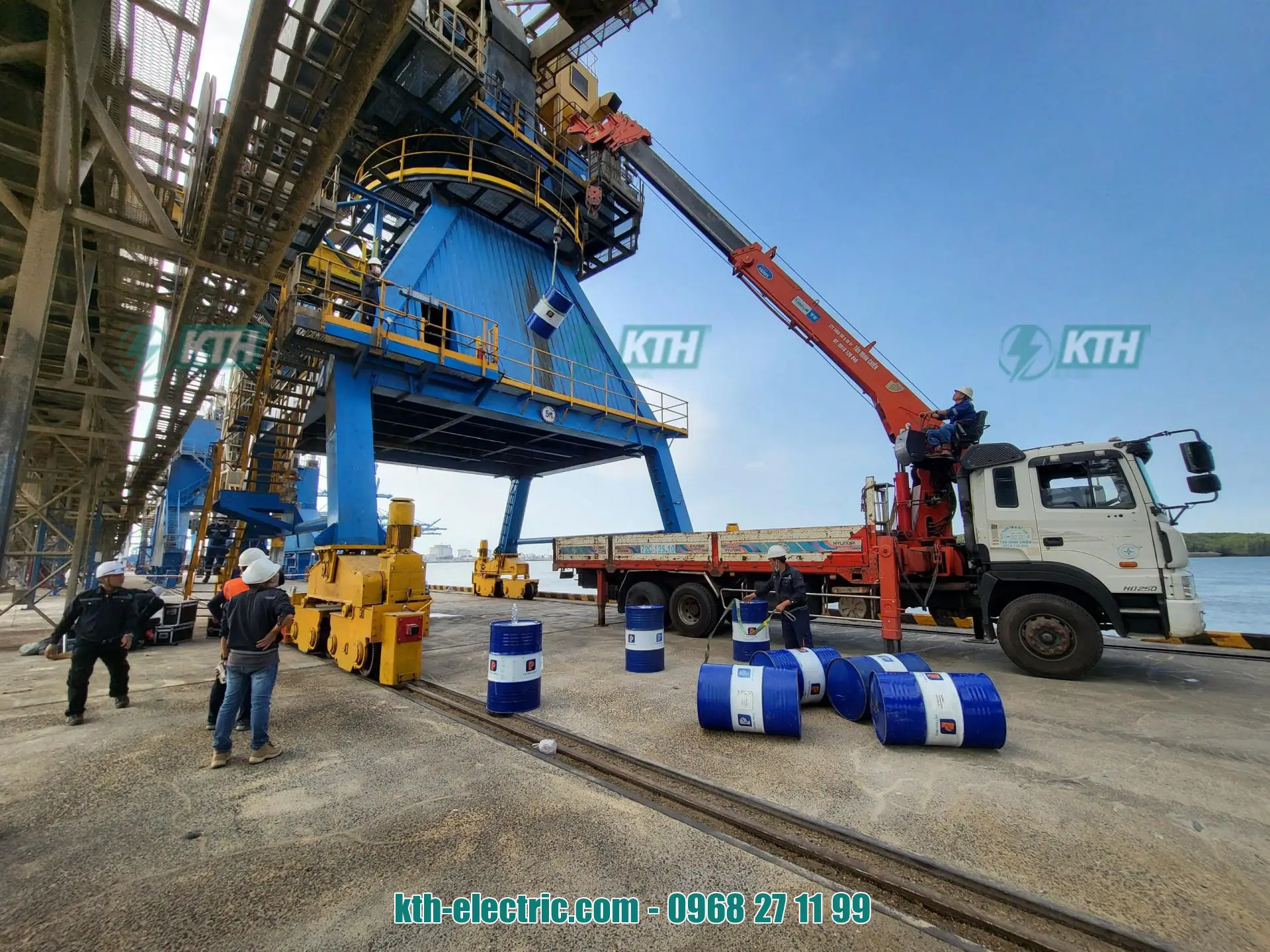
Don’t wait for a failure. KTH ELECTRIC deploys mobile high-vacuum filtration units operated by senior engineers. We guarantee IEC 60422 compliance and provide detailed “Before & After” lab reports for your audit trail.
Available 24/7 for Emergency Support