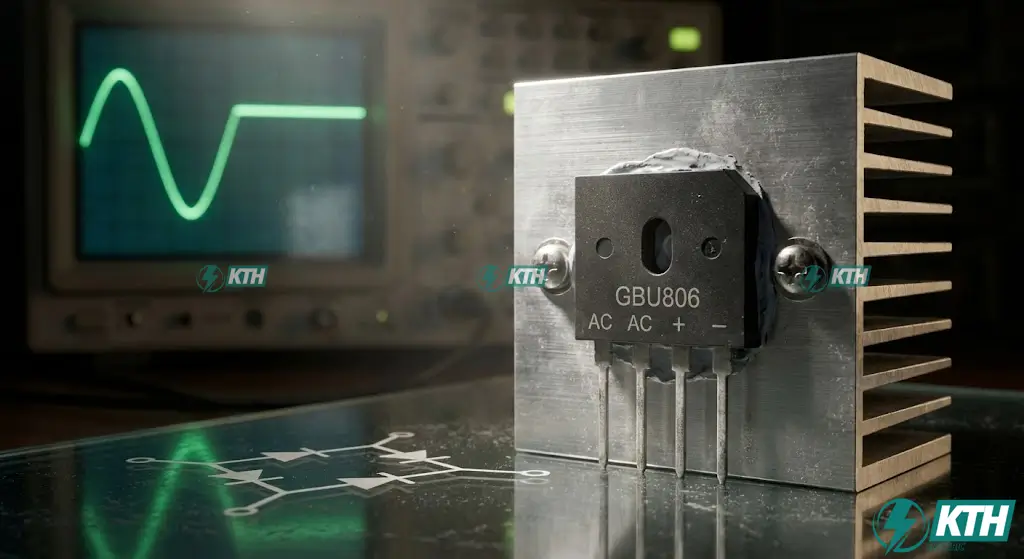

Diode Symbols: The Complete Guide to Electronic & Electrical Schematic Symbols
Reading Time: 6-8 minutes
In the world of electrical engineering and electronics, the diode is one of the most fundamental and versatile semiconductor components. Whether you are troubleshooting a PCB, designing a power supply, or reading a complex schematic diagram, instant recognition of diode symbols is a non-negotiable skill for every engineer and technician. This foundational knowledge is just as critical as understanding High Rupturing Capacity (HRC) fuses for industrial safety.
This comprehensive guide breaks down the complete list of diode symbols, their internal structures, and their specific functions in modern circuitry.
1. Rectifier and General-Purpose Diodes
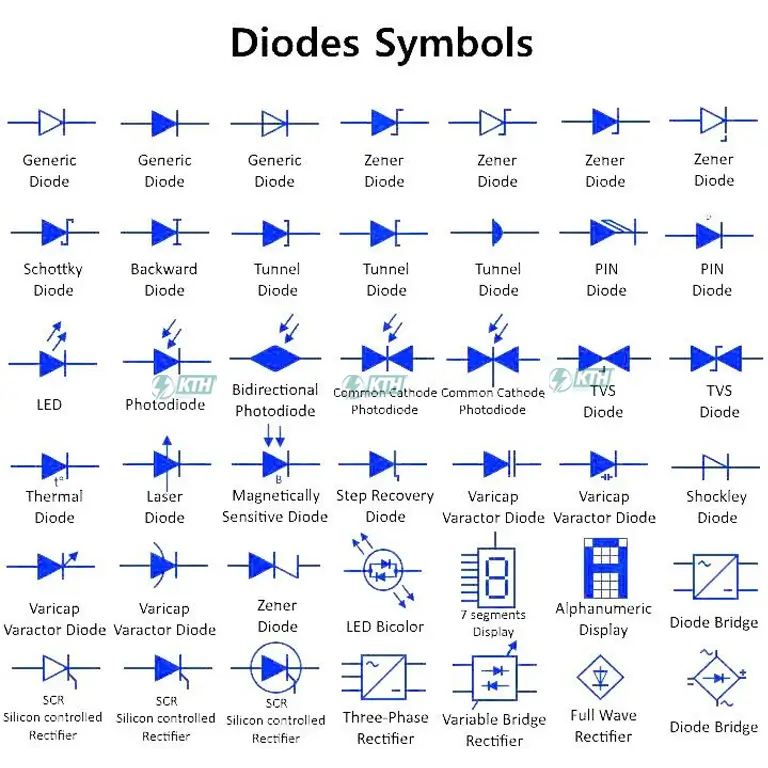
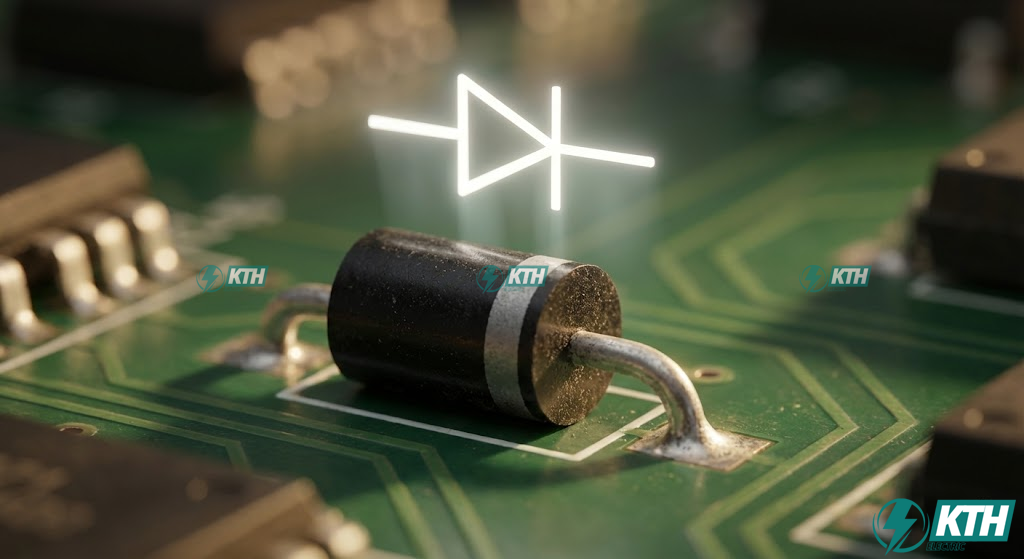
Generic Diode (Rectifier Diode)
This symbol represents the standard PN junction diode, the most common type found in electronics.
- Structure: A basic two-terminal electronic component made from semiconductor material (Silicon or Germanium).
- Function: Acts as a “check valve” for electricity. It allows current to flow easily in one direction (Forward Bias) while blocking current in the opposite direction (Reverse Bias). Understanding this is key for any electrical system assessment.
Bridge Rectifier
Also known as a Full-Wave Rectifier.
- Structure: An arrangement of four diodes connected in a bridge configuration (diamond shape).
- Function: Converts Alternating Current (AC) into Direct Current (DC). Known as rectification, essential for powering DC electronics. A core concept in our electrical engineering interview questions.
Three-Phase Rectifier
- Structure: Modified full-wave bridge utilizing pairs of diodes for each phase of a 3-phase AC input.
- Function: Converts three-phase power into smooth DC output. Common in industrial motor drives requiring inverter maintenance.
2. Voltage Regulation and Switching Diodes
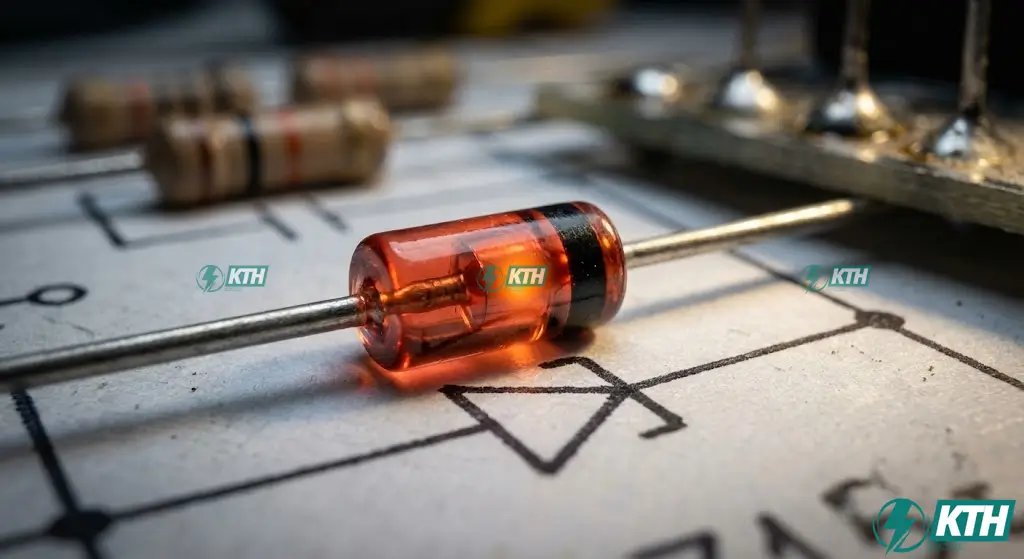
Zener Diode
- Function: Allows current to flow in the reverse direction when voltage exceeds the “Zener Voltage” (Breakdown Voltage).
- Application: Voltage regulation and reference voltage generation.
Schottky Diode
- Structure: Junction between an N-type semiconductor and a metal.
- Key Characteristics:
- Low Forward Voltage Drop: Increases efficiency (0.15V – 0.45V).
- Fast Switching: Ideal for high-frequency applications.
Tunnel Diode
- Principle: Operates on the quantum mechanical Tunneling Effect.
- Key Characteristics: Negative Resistance Region (current decreases as voltage increases).
Specialized Switching
3. Optoelectronics (Light & Photo Diodes)
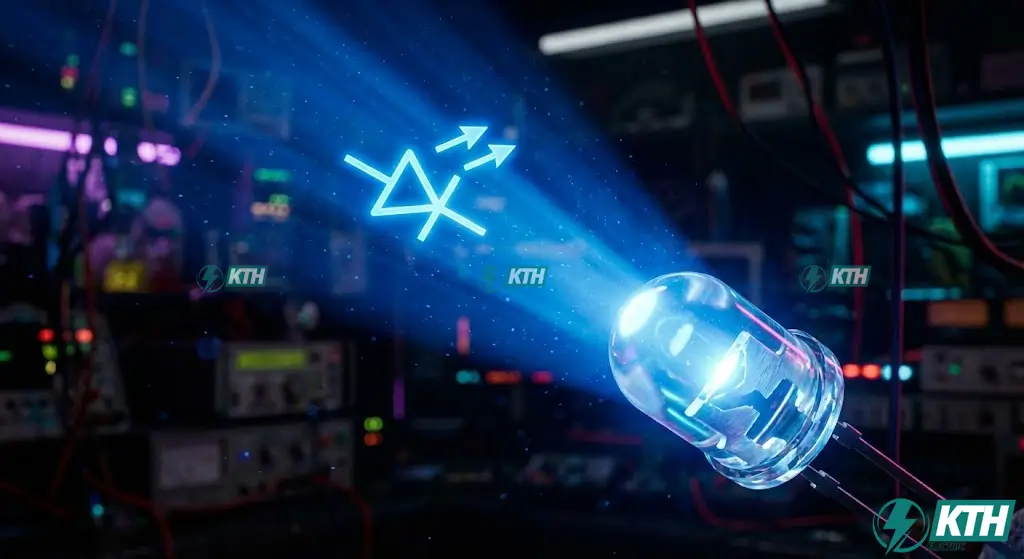
LED (Light Emitting Diode)
Emits incoherent light when forward-biased. Converts electrical energy directly into light energy. Crucial for any office electrical fit-out.
Photodiode
The reverse of an LED; converts light into current (Photocurrent). Symbol arrows point inward.
Laser Diode
Produces coherent light (laser beam). Vital for fiber optics and optical drives.
- Bi-Color LED: Two different colored LEDs in antiparallel. Color changes with current direction.
- Bi-Directional Photodiode: Detects light signals regardless of polarity.
- Common Cathode Photodiode: Dual photodiodes sharing a negative terminal.
- Seven-Segment Display: 7 LEDs in a “figure-8” for decimal numerals.
- 5×7 LED Dot Matrix: Grid of LEDs for complex alphanumeric characters.
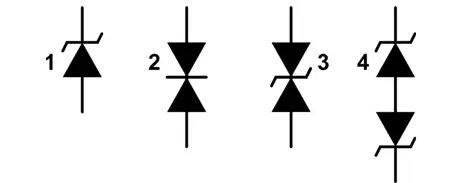
4. Protection and Specialized Diodes


5. Thyristors and Control Devices
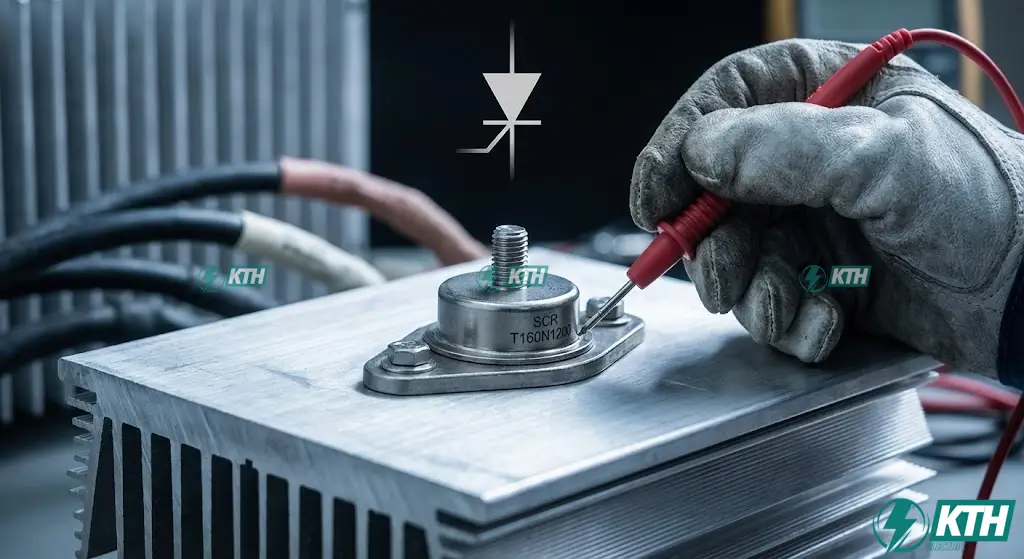
SCR (Silicon Controlled Rectifier)
Structure: A four-layer (PNPN) solid-state device.
Operation: Functions like a controllable diode. It only conducts current when forward-biased AND triggered by a pulse to the Gate terminal. SCRs are central components in soft starters and drives used in motor monitoring solutions.
Shockley Diode
Structure: A PNPN diode similar to an SCR but without a Gate terminal.
Triggering: It switches to a conducting state only when the forward voltage exceeds its internal breakdown voltage.

Variable Bridge Rectifier
Structure: A bridge rectifier constructed using SCRs (Thyristors) instead of standard diodes.
Function: By controlling the triggering angle of the SCR gates, the DC output voltage can be varied precisely. Commonly used in variable speed DC motor drives. Note that non-linear loads like these often require harmonic filtering solutions to maintain power quality.