
Difference Between Socket, Outlet, and Receptacle: The Definitive Technical Guide
While often used interchangeably in casual conversation, the terms Socket, Outlet, and Receptacle have distinct technical definitions according to the National Electrical Code (NEC). Misunderstanding these terms can lead to significant communication errors during facility management, office fit-outs, or electrical system assessments.
⚡ Quick Summary (Direct Answer)
- 📍 Outlet: The point on the wiring system where current is taken to supply equipment. It is an abstract location (the electrical box), not just the physical device.
- 🔌 Receptacle: The specific hardware/device installed at an outlet with contact slots to receive a plug. This is what you physically plug a cord into.
- 💡 Socket: In US terminology, this strictly refers to the device that holds a light bulb (luminaire). In UK/International English, it is synonymous with “receptacle.”
1. What is an Outlet?
“An Outlet is defined by the NEC as a point on the wiring system intended to deliver power to utilization equipment. It refers to the location (box + wiring endpoint), not the device itself.”
Technical Definition (NEC Article 100): “A point on the wiring system at which current is taken to supply utilization equipment.”
Think of the “Outlet” as the location or the destination of the wiring behind your wall. It is the interface point between the hidden building wiring and the external device you want to power.
Key Characteristic: An outlet is defined by the potential to deliver power.
- Receptacle Outlet: An opening in the wall equipped with a receptacle (for plugs).
- Lighting Outlet: An electrical box in the ceiling intended for a hard-wired light fixture.
Industrial Application
In large-scale commercial projects, defining outlet locations accurately is critical during the design phase. If you are planning a new workspace, our team can assist with a comprehensive office electrical fit-out in Vietnam to ensure all outlets are positioned for optimal load distribution and safety.
2. What is a Receptacle?
“A Receptacle is the actual contact device (hardware) installed at an outlet location. It features slots specifically designed to establish an electrical connection with an attachment plug.”
Technical Definition: “A contact device installed at the outlet for the connection of an attachment plug.”
The receptacle is the actual device (the hardware) that you buy. It has the slots (hot, neutral, ground) that accept the prongs of a plug. In a residential or office setting, this is the component that often wears out over time due to frequent plugging and unplugging.
Key Characteristic: It is the female connector responsible for the mechanical and electrical connection.
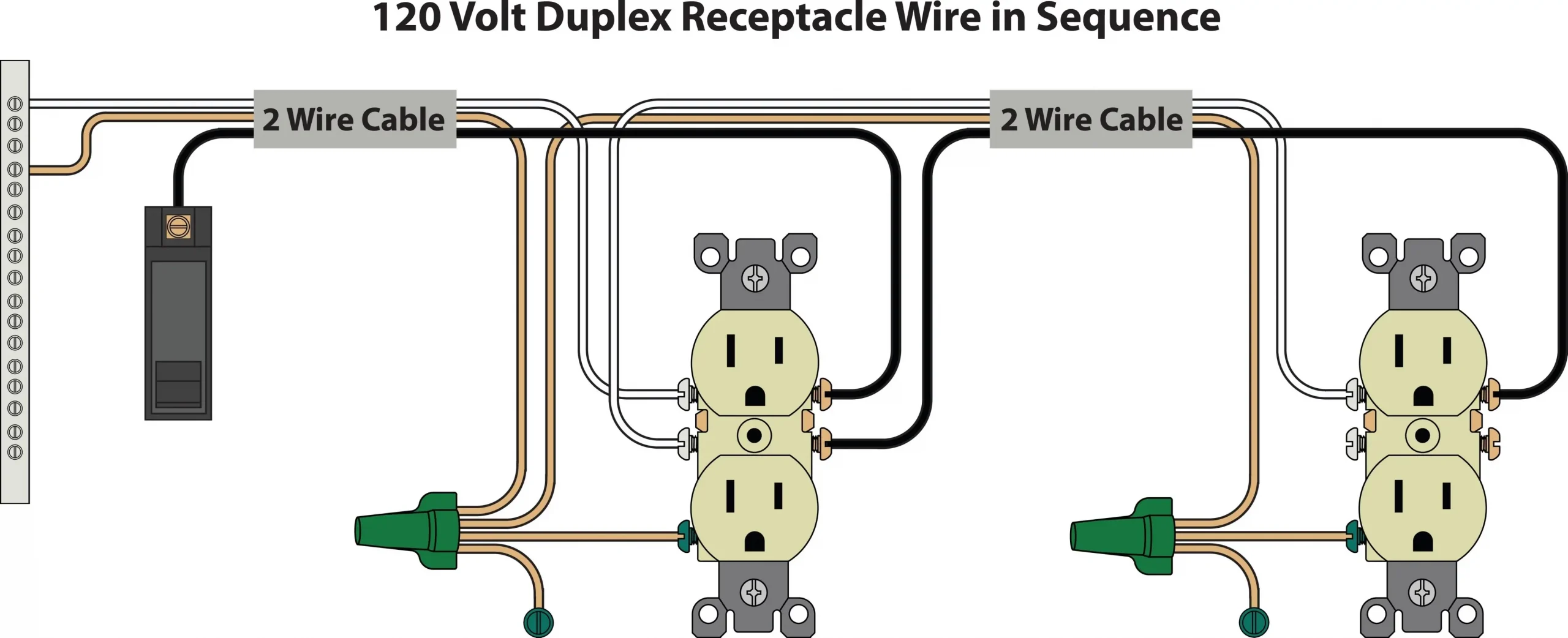 Figure 1: Standard Duplex Receptacle Configuration
Common Issues: Loose contacts in a receptacle can cause arcing and overheating. This is a fire hazard that is often invisible to the naked eye.
To prevent these hazards, regular inspections are necessary. For commercial buildings, we recommend a professional electrical system assessment to identify worn-out receptacles before they cause circuit failure.
3. What is a Socket?
“In US Electrical Terminology, a Socket strictly refers to the component that holds a light bulb (luminaire). It is NOT used to describe wall outlets for plugs.”
🇺🇸 In the United States:
The term “socket” is almost exclusively reserved for light fixtures (Edison screw bases). If you say “socket” to a US-based engineer, they will check your lighting outlets, not your wall plugs.
🇬🇧 In the UK / International:
“Socket” or “Socket-outlet” is the standard term for what the NEC calls a “Receptacle.”
Why distinctions matter in maintenance:
When managing facility maintenance, using the correct terminology ensures the right parts are ordered. A “burned socket” implies a lighting failure, whereas a “burned receptacle” implies a wall power failure. Both can be detected early using advanced diagnostic tools.
🚀 Pro Tip
Loose connections in both sockets and receptacles generate significant heat. Using thermal scan electrical cabinet services and scanning distribution points can detect these hotspots instantly, preventing unexpected downtime.
📊 Comparison Table: At A Glance
| Feature | Outlet | Receptacle | Socket (US Usage) |
|---|---|---|---|
| Primary Nature | A location/point on the circuit | A physical contact device | A screw-base connector |
| Main Function | To deliver current from wiring | To accept a cord/plug | To hold a light bulb |
| Installation | The electrical box + wiring | Mounted inside the outlet box | Inside a lamp or fixture |
| NEC Definition | “A point on the wiring system” | “Contact device… for attachment plug” | N/A (Refers to Lampholders) |
4. Critical Safety & Maintenance Context
Understanding these components is the first step in maintaining a robust electrical system. Whether it is a simple office receptacle or a complex industrial connection, the integrity of these points affects the entire network.
If an outlet fails, it is often a symptom of a larger issue upstream, such as an overload in the distribution panel.
🏠 Residential/Office
Check the breaker and the specific receptacle for physical damage or loose wiring.
🏭 Industrial
Issues at the utilization point (outlet) should trigger a review of the upstream protection. Ensure your system is backed by routine low voltage electrical cabinet maintenance to keep breakers and connections functioning correctly.
For facilities integrating smart technology or sensitive equipment, ensuring stable power delivery at every receptacle is vital. You can learn more about modern connectivity in our article on What is IoT (Internet of Things), which relies heavily on reliable power outlets.