
High Rupturing Capacity (HRC) Fuses: The Ultimate Guide for Electrical Engineers & Safety Pros
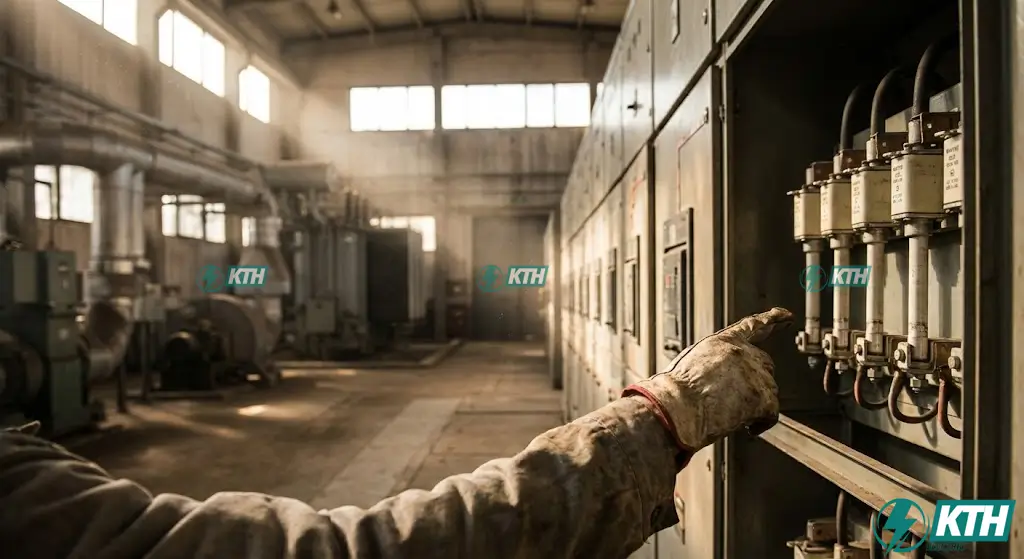
Imagine standing in a substation control room. Suddenly, a catastrophic short circuit occurs on the main busbar. Thousands of amperes of fault current surge through the system in milliseconds. In this critical moment, a standard, rewireable fuse wouldn’t just fail; it would likely explode, turning the switchgear into a shrapnel grenade and risking a massive electrical fire.
This is not a hypothetical scenario. In my 20 years as an electrical engineer, I have seen the devastating aftermath of inadequate protection systems. The unsung hero that prevents these disasters? The High Rupturing Capacity (HRC) Fuse.
Unlike standard circuit breakers or simple wire fuses, HRC fuses are the “special forces” of electrical protection. They are designed to handle the most violent, high-energy faults that industrial power systems can generate. Whether you are designing a distribution board for a factory in Ho Chi Minh City or maintaining a power plant in North Carolina, understanding HRC technology is not just about compliance—it is about survival. For existing facilities, a comprehensive electrical system assessment is crucial to determine if your current protection is adequate.
This guide is your definitive resource. We will strip away the jargon and dive deep into the physics, selection, and application of HRC fuses, ensuring your systems remain safe, compliant, and efficient.
VN Address: 251 Pham Van Chieu, An Hoi Tay Ward, Ho Chi Minh City | Hotline: 0968.27.11.99
US Address: 2936 Pear Orchard Rd, Yadkinville, NC 27055 | Hotline: 1 (336) 341-0068
Email: kthelectric.com@gmail.com
What is High Rupturing Capacity (HRC)?
Quick Definition
High Rupturing Capacity refers specifically to the ability of a fuse to safely interrupt massive fault currents (often exceeding 80kA) without exploding or emitting flame. An HRC fuse contains the explosion internally and extinguishes the arc instantly.
To understand the HRC fuse, we must first define the problem it solves. Every electrical protection device has two main ratings:
1. Current Rating
The normal current it carries (e.g., 100A).
2. Rupturing (Breaking) Capacity
The maximum fault current it can safely interrupt without destroying itself.
A standard home circuit breaker might have a breaking capacity of 6kA or 10kA. However, in industrial environments near large transformers, a short circuit can generate fault currents exceeding 80,000 Amps (80kA) or even 120kA. These are the kinds of environments where our transformer station maintenance service teams operate daily.
If a device with low breaking capacity tries to stop a high fault current, the internal arc will not extinguish. The air inside ionizes, the device melts, and the arc jumps to the enclosure, causing an explosion.
Construction & Internal Architecture of an HRC Fuse
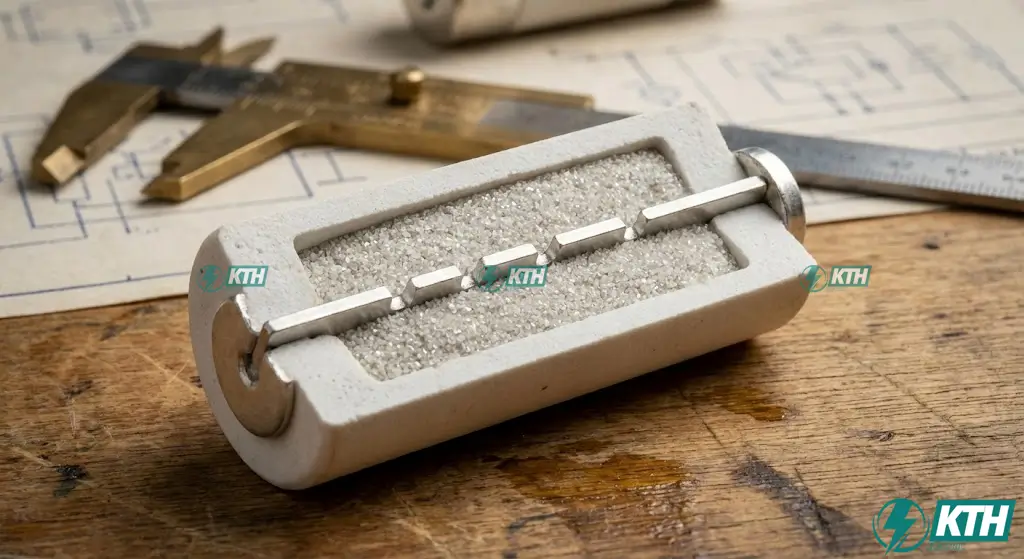
An HRC fuse is not just a wire in a tube; it is a precision-engineered thermal device. Its robust construction allows it to withstand the immense thermal and mechanical stresses of a short circuit.
1. The Ceramic Body
Unlike glass fuses found in old radios, HRC fuses use a body made of high-grade ceramic or porcelain.
Why Ceramic? When a fault occurs, the internal temperature can briefly rival the surface of the sun. Ceramic ensures the cartridge doesn’t shatter under immense internal pressure.
2. The Fusible Element
The heart of the fuse, typically made of Silver (Ag) or copper.
- Geometry: Features “necks” or notches designed to melt first, creating multiple small arcs.
- The Eutectic Spot: A blob of tin/lead alloy that lowers the melting point for precise overload protection without excessive heat.
3. The Filler Material: Silica Sand
The secret weapon. The space is tightly packed with pure, chemically treated Quartz Sand (Silica).
Function: It absorbs energy and melts into glass to quench the electric arc during a fault.
Working Principle: How HRC Fuses Extinguish Arcs
Normal Operation vs. Fault Condition
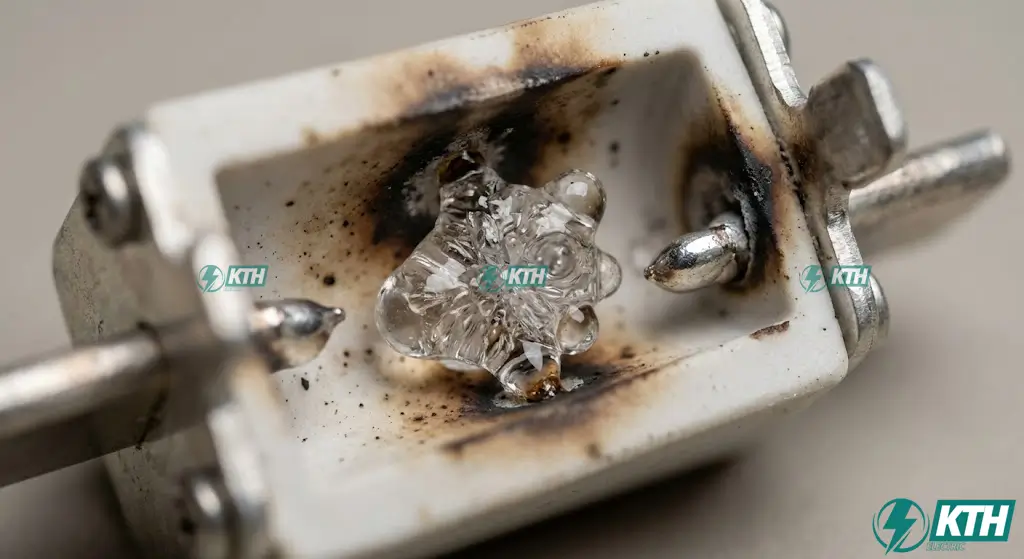
Under normal load, heat dissipates through the sand and ceramic body. But when a massive short circuit occurs (Fault Condition), the “Glass Bead” Effect takes over:
- Vaporization: The silver element melts and vaporizes instantly at the notched sections.
- Arcing: An electric arc forms across the gaps (superheated plasma).
- Chemical Reaction: The arc’s heat melts the surrounding silica sand. Vaporized silver reacts with molten sand to form a high-resistance silicate glass.
- Quenching: This molten glass creates a solid, insulating barrier (“fused bead”) that cools and extinguishes the arc.
- Interruption: Resistance rises rapidly, forcing current to zero. The glass bead solidifies, permanently insulating the circuit.
Current Limiting Effect (Cut-Off)
One of the greatest advantages of HRC fuses is their Current Limiting capability.
Because the fuse acts so fast (often within a few milliseconds), it cuts off the fault current before it reaches its maximum prospective peak. This rapid response is why they are often used as backup protection for recloser units in distribution networks.
HRC Fuse vs. Circuit Breaker vs. Rewireable Fuse
At KTH Electric, clients often ask: “Why should I use a ‘use-once’ fuse when I can use a resettable breaker?” The answer lies in physics and reliability.
| Feature | Rewireable Fuse | Circuit Breaker (MCB) | HRC Fuse |
|---|---|---|---|
| Breaking Capacity | Low (~2-4kA) | Medium (10-50kA) | Very High (80-120kA) |
| Speed | Slow | Moderate (Delay) | Ultra-Fast (Current Limiting) |
| Maintenance | High (Rewire) | Medium (Testing) | Zero (Fit & Forget) |
| Cost | Very Low | High | Moderate |
Types of HRC Fuses & Their Applications
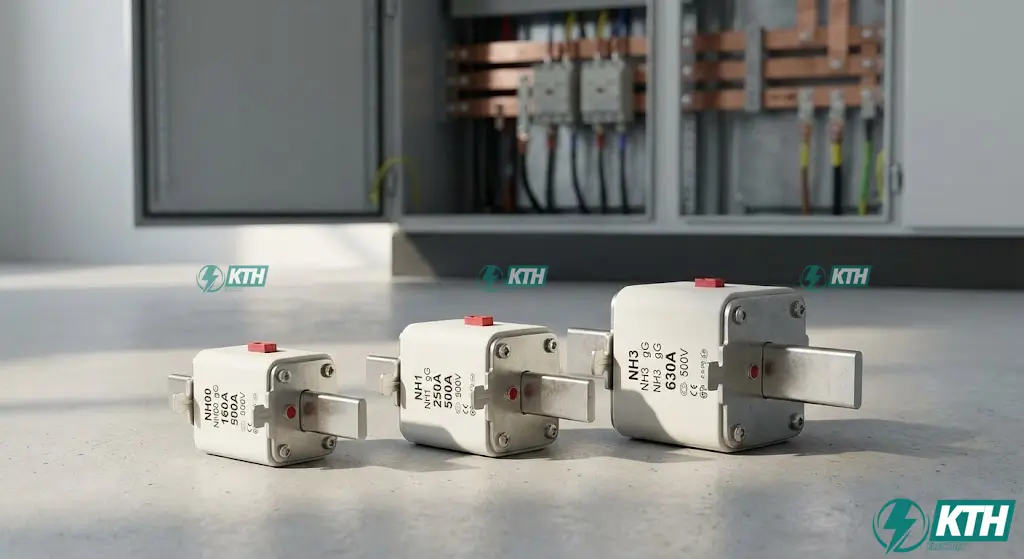
The term “HRC” covers a wide family of fuses. Identifying the correct type is crucial for maintenance and safety.
1. NH (Blade) Fuses
Commonly known as DIN fuses, these are the workhorses of European/Asian industrial power.
- Features: Square body, knife-blade contacts, visual top indicator.
- Application: Main switchboards, feeder pillars.
2. BS 88 (Bolted) Fuses
Distinct for cylindrical body and offset “tags” with bolt holes.
- Features: Bolted directly onto busbars. Critical for busway systems integrity.
- Application: Heavy motor circuits.
3. Liquid HRC Fuses
A specialized beast for High Voltage (HV) protection.
- Construction: Element submerged in Carbon Tetrachloride (CTC).
- Application: Protecting HV transformers (>3.3kV). See our transformer services.
Understanding HRC Fuse Ratings & Characteristics
Reading the side of an HRC fuse can feel like deciphering a secret code. However, for a facility manager, getting these codes wrong can mean either nuisance tripping (downtime) or catastrophic equipment failure. Mastering these details is often a key part of our electrical engineering interview questions for new hires. Here is how to decode the specifications.
1. Breaking Capacity (kA)
The headline figure representing the maximum fault current the fuse can interrupt safely. Common industrial ratings are 80kA or 120kA.
2. Utilization Categories
- gG (General): Protects cables/transformers against overloads & short circuits.
- aM (Motor): Designed for motors, ignoring startup surges. Vital for effective motor monitoring solutions.
- aR (Semiconductor): Ultra-fast acting for VFDs.
3. The I²t Value (Joule Integral)
A measure of the thermal energy let through during a fault. HRC fuses excel here due to current-limiting cut-off characteristics, often analyzed during harmonic filtering solutions implementation.
4. Fusing Factor
Typically between 1.25 and 1.6. A 100A fuse melts around 125A-160A. Understanding this curve is similar to reading overload relays and trip curves.
Advantages & Disadvantages
To make an informed engineering decision, you must weigh the pros and cons compared to modern circuit breakers (MCCBs/ACBs).
Advantages
- ✓
Speed: Clears faults in less than a quarter cycle (<5ms). - ✓
Consistency: Non-aging silver element ensures reliability even after 20 years. - ✓
No Maintenance: “Fit and forget” technology. - ✓
High Breaking Capacity: Handles massive fault levels safely.
Disadvantages
- ✗
Single Use: Must be replaced after blowing; requires spare stock. - ✗
Phasing: Single-phasing risk for motors if only one fuse blows. - ✗
Heat: Significant heat generation at contacts if loose.
Selection Guide: How to Choose the Right HRC Fuse
Selecting the wrong fuse is the most common error we see during audits at KTH Electric. Follow this 4-step protocol:
1. Determine System Voltage
The fuse voltage rating must be ≥ the system voltage (e.g., 500V fuse for 415V system). Never use AC fuses for DC.
2. Calculate Full Load Current
Select a current rating ($I_n$) slightly higher than the load. For specific calculations, refer to our guide on wire size for 50A breaker.
3. Account for Inrush Currents
For motors, use aM fuses or higher rated gG fuses to withstand the 6x startup surge.
4. Check Discrimination (Selectivity)
Ensure the major upstream fuse is at least 1.6 times the rating of the downstream minor fuse to isolate faults correctly.
Practical Maintenance & Troubleshooting
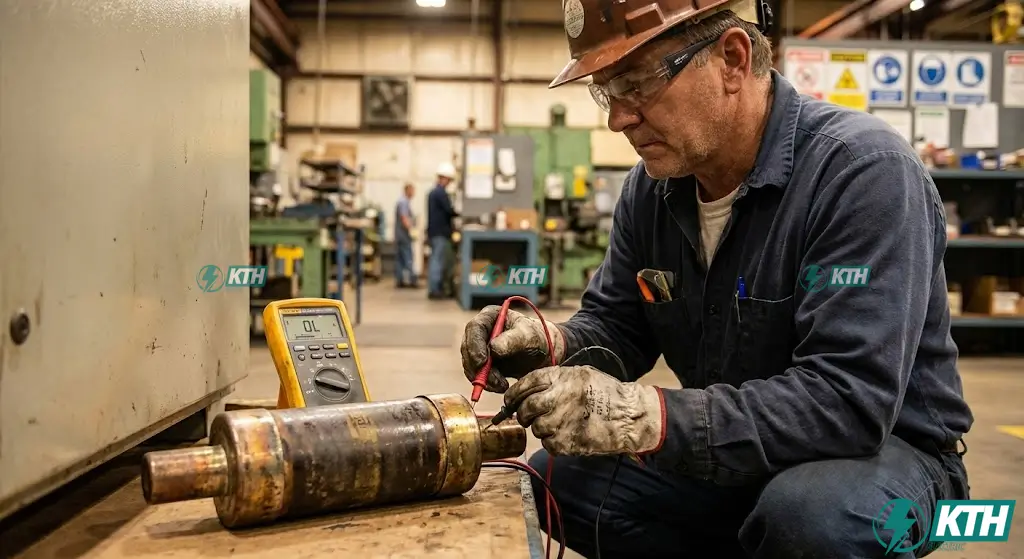
While HRC fuses are low maintenance, the fuse holders are not.
Visual Inspection Checklist
- Discoloration: Indicates overheating/loose connections. Detect early with thermal scan electrical cabinet service.
- Cracks: Ceramic body damage compromises safety. Replace immediately.
How to Test an HRC Fuse
- Remove fuse: Never test live.
- Set Multimeter: Continuity/Ohms mode.
- Measure:
- ~0 Ω (Beep) = Good.
- OL (Infinite) = Blown. (See: how to test a capacitor).
⚠ Safety Warning
NEVER bypass a blown HRC fuse with copper wire. This removes all protection, turning a short circuit into a potential arc flash explosion.
Local Standards & Availability (Vietnam Context)
In the Vietnamese industrial market, we primarily follow IEC 60269 standards for low-voltage power fuses.
At KTH Electric, we frequently supply and install:
- NH (Blade) Fuses: Standard for industrial cabinets (Sizes 00-3). Brands: Siemens, Bussmann, Schneider.
- Cylindrical (10×38, 14×51): Common in control panels/solar combiners.
Always check for “gG” or “aM” markings to ensure the correct protection curve.
Frequently Asked Questions (FAQs)
Conclusion
The HRC fuse is a marvel of simple, robust engineering. It stands as the last line of defense against the immense destructive power of electrical faults. While modern circuit breakers offer convenience, the sheer stopping power and reliability of an HRC fuse in high-fault scenarios remain unmatched.
Understanding how to select, maintain, and respect these devices is fundamental to facility safety. At KTH Electric Co., Ltd., we specialize in industrial protection coordination. Whether you need a safety audit or genuine replacements, our engineering team is ready to assist.