


 KTH ELECTRIC - COMPREHENSIVE ELECTRICAL SOLUTIONS
The stakes are incredibly high. From the bustling Special Economic Zones (SEZs) in Preah Sihanouk to the sprawling urban developments in Phnom Penh, the demand for stable, uninterrupted power is absolute. This transformation is heavily reliant on engineering, procurement, and construction (EPC) projects led by Electricité du Cambodge (EDC). Whether you are a foreign investor, a project manager, or an engineering firm looking to secure international tenders backed by the Asian Development Bank (ADB) or JICA, understanding the technical and strategic nuances of electrical infrastructure construction in Cambodia is your ticket to entry.
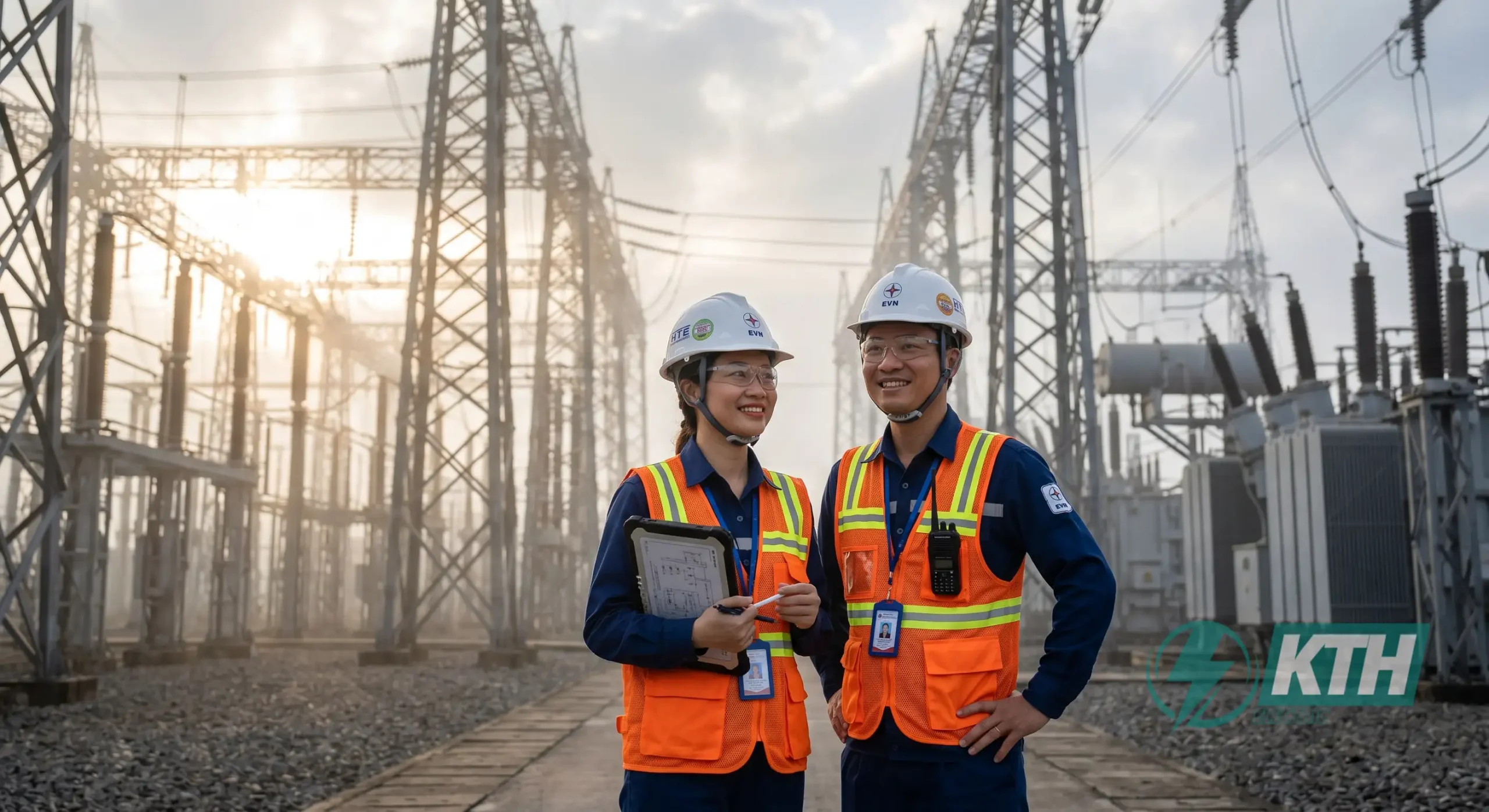
Let’s dive deep into the core components, strict construction timelines, and the exact engineering standards required to execute these multi-million-dollar power transmission projects successfully.
When we talk about building extra-high-voltage infrastructure in a developing tropical climate, there is zero room for error. Energy infrastructure and substation projects in Cambodia generally consist of two massive, integrated phases: Civil Works and Electrical/SCADA Works.
As an EPC contractor, you are not just pouring concrete; you are building the central nervous system of the Cambodia national grid. Here is exactly what these projects entail:
1. Civil Works: The Unshakeable Foundation
Before a single transformer is energized, the site must be heavily engineered to withstand environmental stress, heavy monsoon rains, and massive electrical loads.
- Concrete Foundations: You are laying specialized foundations designed to bear the immense weight of 150 MW oil-immersed transformers and switchgear arrays.
- Steel Support Structures: High-grade galvanized steel structures must be erected to support overhead busbars and incoming transmission lines safely.
- Cable Trenches: Extensive, secure trenching is required to house medium-voltage (MV) and low-voltage (LV) cabling, ensuring they remain protected from water ingress and physical damage.
- Control Buildings: These are fortified, climate-controlled structures built specifically to house sensitive protection relays, server racks, and SCADA hardware.
2. Electrical & SCADA Works: The Brain and Brawn
This is where the heavy engineering comes into play. The electrical integration must align perfectly with EDC’s stringent national standards.
- Primary Systems (High Voltage): Contractors must procure, install, and test massive 500kV, 230kV, or 115kV primary systems. These form the backbone of the substation, stepping down power from cross-border transmission lines for regional distribution.
- Secondary Control & Protection Systems: Redundancy is key. These systems are meticulously wired to detect faults in milliseconds, isolating dangerous surges before they can cascade through the national grid.
- SCADA Integration (Supervisory Control and Data Acquisition): Modern Cambodian substations are smart. SCADA integration allows EDC dispatchers in Phnom Penh to remotely monitor real-time power flows, control breakers, and diagnose faults instantly across the network.
Conventional EPC Contracts (18 to 24 Months)
The traditional route of building a brick-and-mortar substation is labor-intensive and time-consuming. Conventional EPC contracts take 18 to 24 months to complete.
Why does it take so long?
- Extensive site preparation and concrete curing times.
- Prolonged on-site assembly of primary high-voltage equipment.
- Complex, site-specific wiring of protection and SCADA cabinets.
- Weather delays typical of the Cambodian wet season, which can halt civil engineering works for weeks at a time.
The Game Changer: Prefabricated Modular Substations (4 to 9 Months)
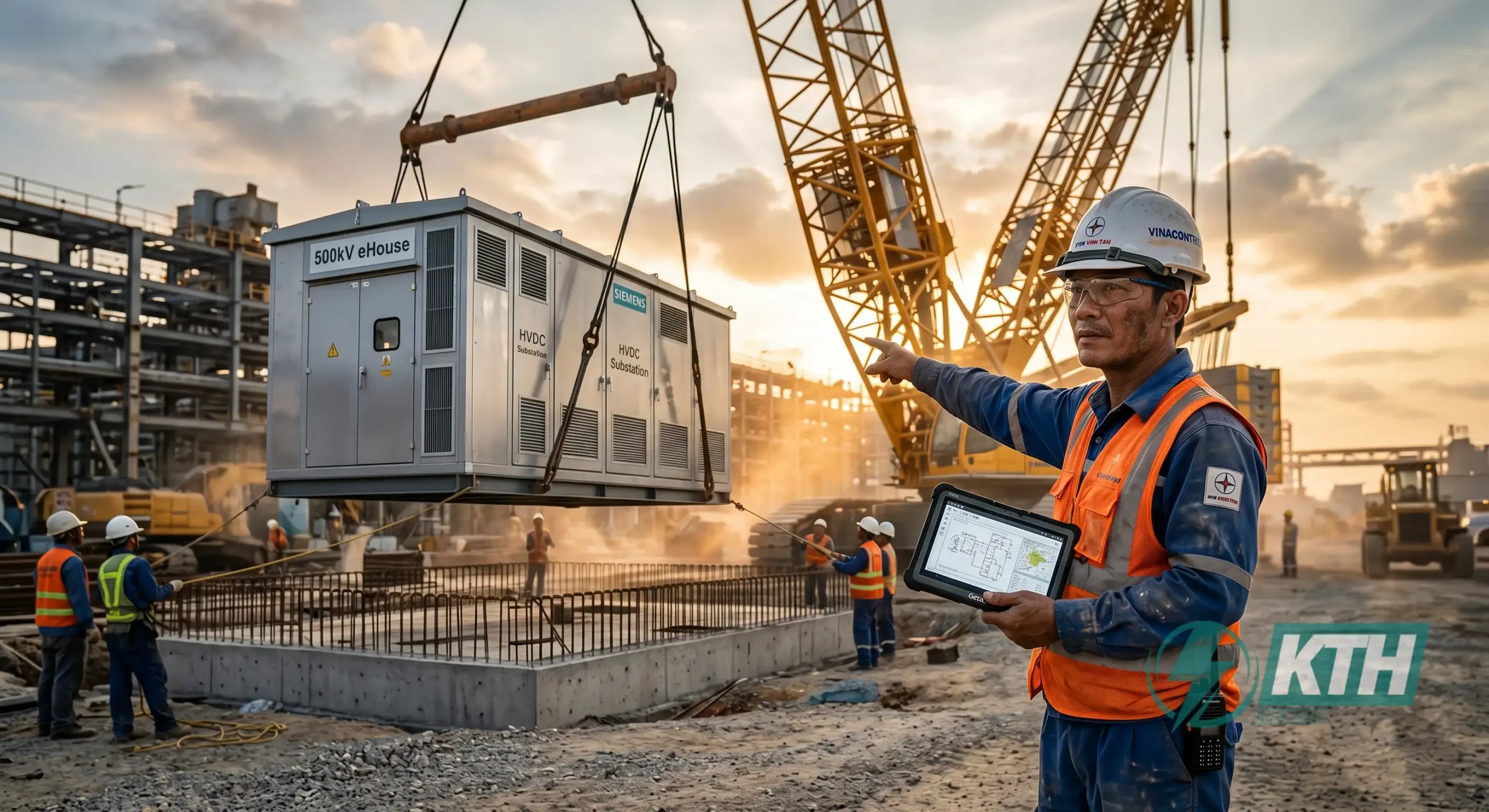
If you want to dominate the market and drastically improve your project ROI, modular engineering is the answer. Forward-thinking companies like PESTECH deploy prefabricated modular substations (often referred to as eHouses) to cut construction times by 4 to 9 months.
An eHouse is completely assembled, wired, and fully tested in a clean, climate-controlled factory environment before it even arrives in Cambodia. Once the civil foundations are ready, the eHouse is shipped to the site, craned into position, and connected to the primary grid. This drastically reduces on-site labor, eliminates weather-related delays, and accelerates the commissioning phase, allowing industrial clients to access power months ahead of schedule.
1. Permitting & Design (The EDC Gatekeeper)
You cannot simply connect a 1600 kVA transformer to the national grid without strict regulatory oversight. Approval from Electricité du Cambodge (EDC) is absolutely mandatory for both grid connection and transformer capacity sizing. The EDC engineers will meticulously review your single-line diagrams, load calculations, and short-circuit analyses to ensure your facility will not destabilize the local distribution network.
2. Sourcing: Compliance Over Cost
Procurement is a minefield if you do not understand the local standards. You must source either oil-immersed transformers (typically for outdoor or pole-mounted installations) or dry-type transformers (critical for indoor commercial applications like casino resorts or high-rise towers). Regardless of the type, every piece of hardware must be strictly compliant with the Cambodian grid standard of 230V / 50Hz. Importing non-compliant equipment is a costly mistake that will result in immediate rejection by EDC inspectors.
3. Hardware Integration: The Critical Path
A transformer does not operate in isolation. It requires flawless integration with downstream and upstream protection systems. Your electrical contractors must execute the precise integration of Medium Voltage (MV) switchgear, Low Voltage (LV) distribution boards, and Automatic Transfer Switches (ATS). In massive developments—such as the multi-million-dollar casino resorts in Sihanoukville—the ATS is the lifeline, ensuring instantaneous switchover to backup generators to maintain 24/7 power redundancy.
4. Commissioning: The Final Barrier
Before the EDC allows you to flip the switch, the entire system must undergo rigorous third-party testing. This includes dielectric tests to verify the integrity of the insulating oil or resin, comprehensive insulation tests (Megger testing), and final visual inspections before energizing the system. Skipping or rushing this phase guarantees catastrophic arc flashes and immediate permit revocation.
Top-Tier EPC & National Grid Contractors
For mega-projects—think high-voltage substations, cross-border transmission lines, and national grid extensions—the market relies on international titans.
- PESTECH: A dominant force known for deploying cutting-edge prefabricated modular substations (eHouse) that drastically cut construction timelines.
- Sojitz: Frequently involved in large-scale infrastructure projects backed by Japanese foreign investment.
- CHMC (China National Heavy Machinery Corporation): A global powerhouse providing complete vertical integration (EP, EPC, and BOT). They are heavily invested in Cambodia, having successfully executed the 115kV transmission line from Phnom Penh to Bavet and massive rural grid extensions spanning 11 provinces.
Transformer & Switchgear Installation Specialists
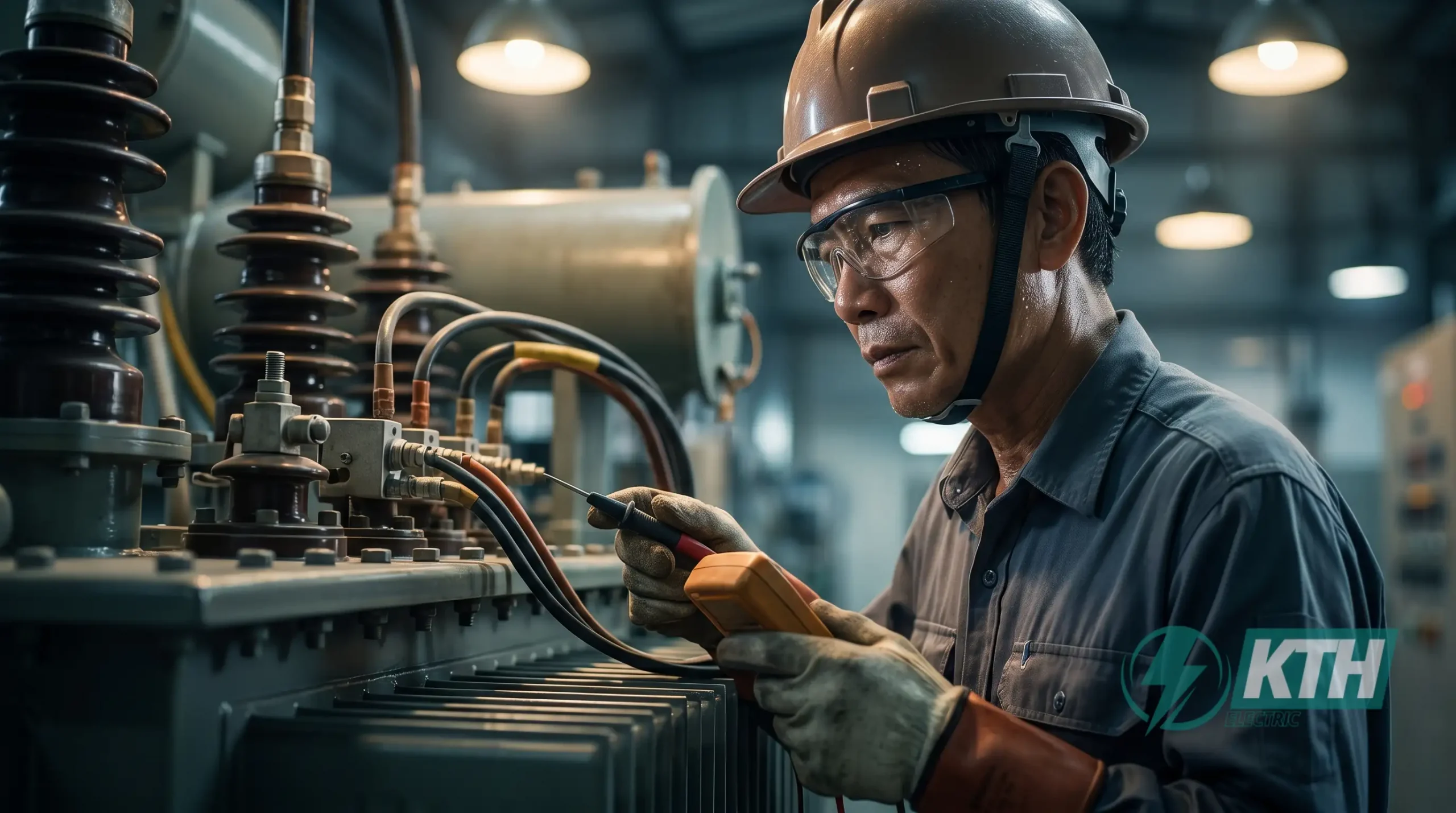
When it comes to the highly technical work of manufacturing, supplying, and installing transformers and switchboards, you need specialized M&E contractors.
- Comin Asia: A major regional contractor trusted for complex industrial and commercial intakes, including the Chip Mong Tower and the American Embassy in Phnom Penh.
- ATS (ATS Cambodia): A premier provider manufacturing high-quality distribution switchboards, compact substations, and transformers tailored for the local climate.
- EEPS – Cambodia: Your go-to for highly specific transformer maintenance, repair, and precision installation services.
- LICA Cambodia Co., Ltd: A highly reputable electrical equipment supplier and contractor operating out of Khan Sen Sok, Phnom Penh.
Turnkey MEP Engineering Firms
For full-lifecycle services—from initial 3D BIM modeling to final fire suppression and HVAC installation—Cambodia boasts several top-tier MEP firms ensuring compliance with international engineering codes.
- DBD Engineering: A publicly listed (CSX) design-build giant handling civil and integrated MEP works for massive structures like the FTB Bank Tower.
- TKT Engineering: The heavy hitters behind large-scale hospitality and commercial developments, including the Sokha Phnom Penh Hotel and the National Assembly Building.
- MEP-E: Pioneers in the region, being the first in Cambodia to deploy a dedicated BIM (Building Information Modeling) team for design and energy audits.
- CE&P Corporation: A reliable turnkey provider handling everything from high/low voltage systems to long-term monthly/yearly maintenance contracts.
- ETS Engineering: Specialists in full MEP installations tailored for offices, factories, and the hospitality sector, such as the Aviary Hotel.
Q: Can I use standard European or North American transformers in Cambodia?
A: No, not unless they meet the specific local standards. All procured hardware, including oil-immersed and dry-type transformers, must be strictly compliant with the Cambodian grid standard of 230V / 50Hz. Furthermore, Electricité du Cambodge (EDC) must approve your capacity sizing and design before any installation begins.
Q: How can contractors reduce the 18 to 24-month construction timeline for substations?
A: The most effective method to bypass the long civil and electrical assembly phases of a conventional EPC contract is to utilize prefabricated modular substations, commonly known as eHouses. Companies like PESTECH deploy these pre-wired, pre-tested units to cut construction times down to just 4 to 9 months.
Q: Where can I find legitimate bidding opportunities for Cambodian grid expansion projects?
A: Because these massive infrastructure projects are heavily backed by foreign aid and development loans, you will not find them on local job boards. Bidding opportunities and EPC tenders are regularly published on the official international procurement platforms of the funding agencies, primarily the Asian Development Bank (ADB), JICA, and KfW.
Q: What is the primary purpose of the new 500kV transmission line being built in Preah Vihear?
A: The 500kV extra-high-voltage line is a cross-border transmission project designed to import power from the Lao border directly to the East Phnom Penh substation. This massive infrastructure plays a critical role in stabilizing the regional power supply and supporting Cambodia’s rapidly growing urban and industrial demand.
Contact Our Engineering & Support Team:
251 Pham Van Chieu, An Hoi Tay Ward, HCMC
2936 Pear Orchard Rd, Yadkinville, NC 27055
0968.27.11.99
kthelectric.com@gmail.com

REVIEWED BY:
DR. KHUONG NGUYEN-VINH
✓ Verified Expert
Dr. Khuong Nguyen-Vinh is a Lecturer in Electronic & Computer Systems Engineering at RMIT University Vietnam, dedicated to bridging the gap between advanced theory and practical energy solutions.
With a Ph.D. in Electrical Power Engineering from VSB – Technical University of Ostrava, his research focuses on intelligent control systems for renewable energy, including AI-driven fault detection for solar panels and optimized MPPT algorithms.
💡
Expert Commitment:
“A committed educator, Dr. Khuong mentors the next generation of engineers in power electronics, embedded systems, and sustainable technology integration for Industry 4.0.”