


 KTH ELECTRIC - COMPREHENSIVE ELECTRICAL SOLUTIONS
Transformer Installation Cambodia: Turnkey MV/LV Substation Solutions & EDC Compliance
To successfully execute a commercial or industrial transformer installation in Cambodia, project managers must adhere strictly to the national MV/LV electrical standards of 230V/400V at 50Hz and secure mandatory grid connection approval directly from Electricité du Cambodge (EDC). Operating without turnkey installation services from licensed, specialized electrical engineering firms will result in failed inspections, costly equipment replacements, and immediate grid rejection.
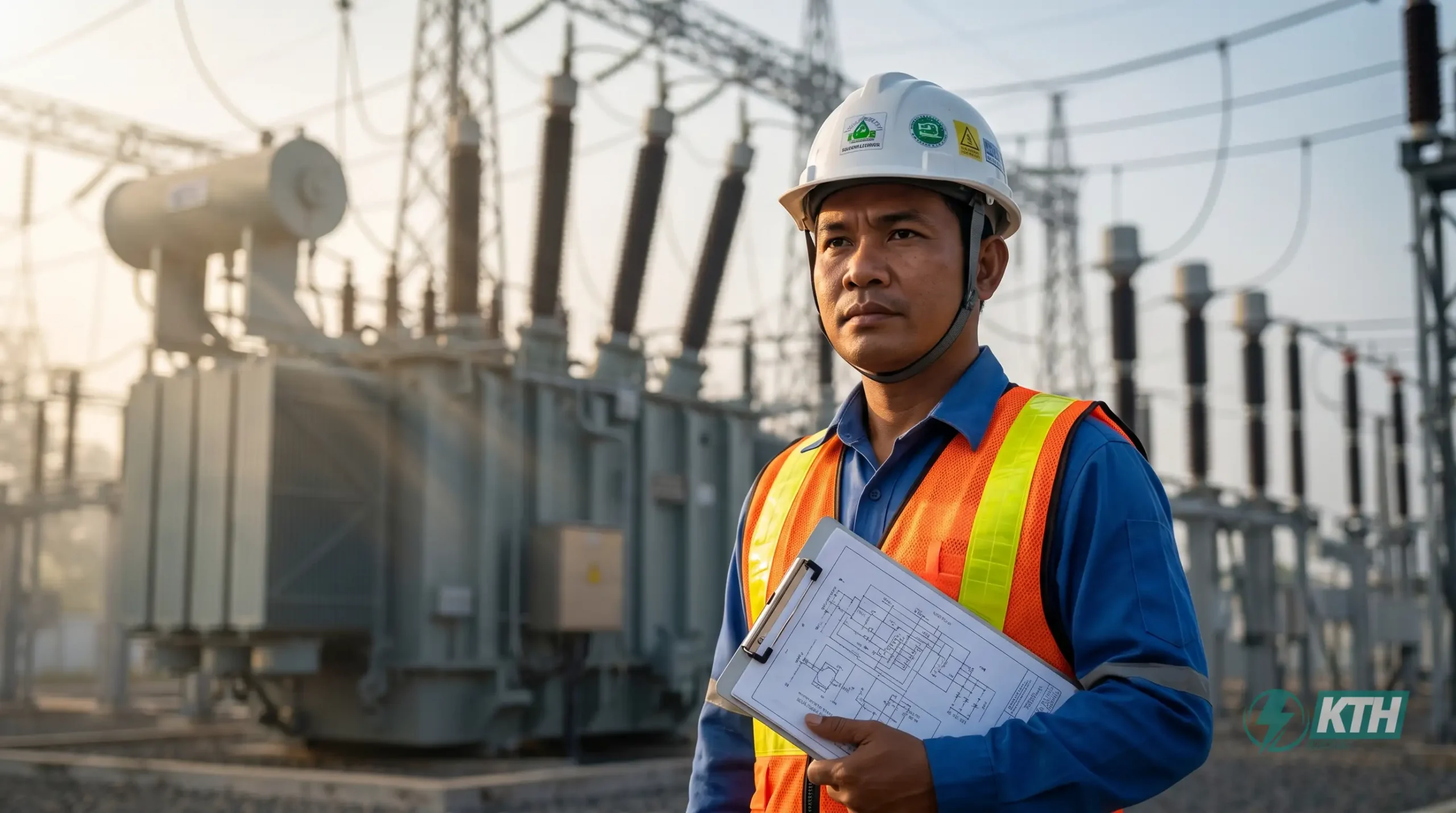
As an electrical engineer managing high-voltage grid integrations for over 20 years, I have seen millions of dollars wasted by foreign investors and local developers who treat the Cambodian electrical grid like a plug-and-play system. It is not. You are dealing with highly specific local compliance laws, rigorous testing phases, and critical hardware sourcing requirements.
If you want your facility energized on time and within budget, here is the exact technical roadmap, project scope, and contractor network you must utilize.
What Are The Mandatory MV/LV Electrical Standards For Transformer Installation In Cambodia?
You cannot engineer a power system in Cambodia based on North American or European defaults. The national infrastructure operates on a rigid technical framework. Failing to align your step-down transformers and switchboards with these baselines is the fastest way to derail your project timeline.
230V/400V Voltage And 50Hz Frequency Requirements
The absolute foundation of any electrical infrastructure project in the country is the national voltage and frequency standard. Transformer installation in Cambodia involves strict adherence to local MV/LV electrical standards (230V/400V, 50Hz).
When sourcing high-voltage step-down transformers, whether you are importing them or buying through local distributors, the primary and secondary windings must be explicitly rated for this environment. If you import a 60Hz transformer, it will experience severe core saturation, excessive heating, and catastrophic failure upon energization. Every piece of integrating hardware—from Ring Main Units (RMU) to Main Distribution Boards (MDB)—must be natively compatible with the 230V/400V, 50Hz baseline.
Electricité Du Cambodge (EDC) Grid Connection Regulations And Safety Clearances
Electricité du Cambodge (EDC) is the absolute authority governing power distribution. Before a single wire is connected to the national grid, you must navigate their regulatory framework.
Transformer installations require strict adherence to regulations set by EDC, meaning that no commercial building or industrial complex can be energized without formal safety clearances. This is not a rubber-stamp process. EDC inspectors will rigorously evaluate your single-line diagrams, load calculations, and the protective relay settings of your automatic reclosers to ensure your substation will not introduce faults into the regional high-voltage grid. Turnkey installation services, handled by licensed firms, are essentially mandatory because these contractors hold the institutional knowledge required to secure EDC approvals efficiently.
What Is The Comprehensive Project Scope For High-Voltage Step-Down Transformer Integration?
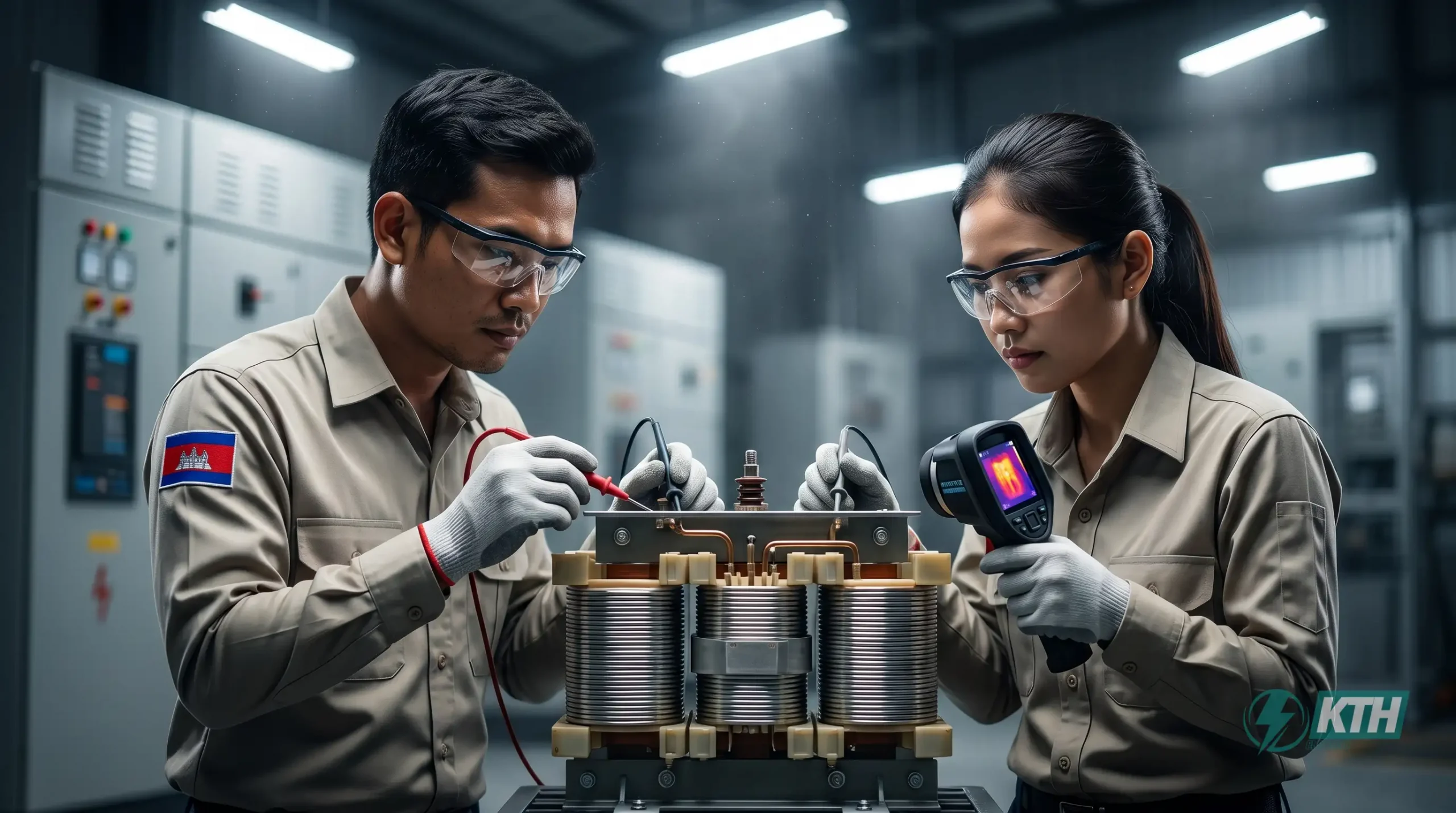
A turnkey MV/LV substation is not just a piece of hardware dropped onto a concrete slab. It is a highly integrated, multi-phase engineering project. Leading MEP contractors break down the typical project scope into four non-negotiable phases.
Design, Permitting, And Securing EDC Layout Approvals
Actionable design begins with drafting precise layouts and securing EDC approval for grid connections. Your electrical engineering team must map out the exact capacity requirement (kVA rating) based on your facility’s peak load. Submit these detailed schematics to the EDC early. Do not procure equipment until the EDC signs off on your design and confirms that the local distribution line has the capacity to support your specific kVA requirements.
Sourcing Dry-Type And Liquid-Filled Power Transformers (e.g., GreenT Series)
Equipment selection dictates the safety and longevity of your substation. The sourcing phase involves procuring high-voltage step-down transformers, Main Distribution Boards (MDB), and necessary switchgears.
Depending on your environment, you will choose between two main technologies:
- Dry-Type Transformers: Essential for indoor commercial buildings where fire safety is the top priority.
- Liquid-Filled Transformers: Typically deployed for outdoor pad-mounted or pole-mounted systems due to their superior cooling capabilities. For example, brands like Legrand offer high-efficiency dry-type and liquid-filled transformers, such as their GreenT series, which are well-supported in the Cambodian market.
Civil And Mechanical Works: Concrete Plinths, Package-Type, And Pole-Mounted Systems
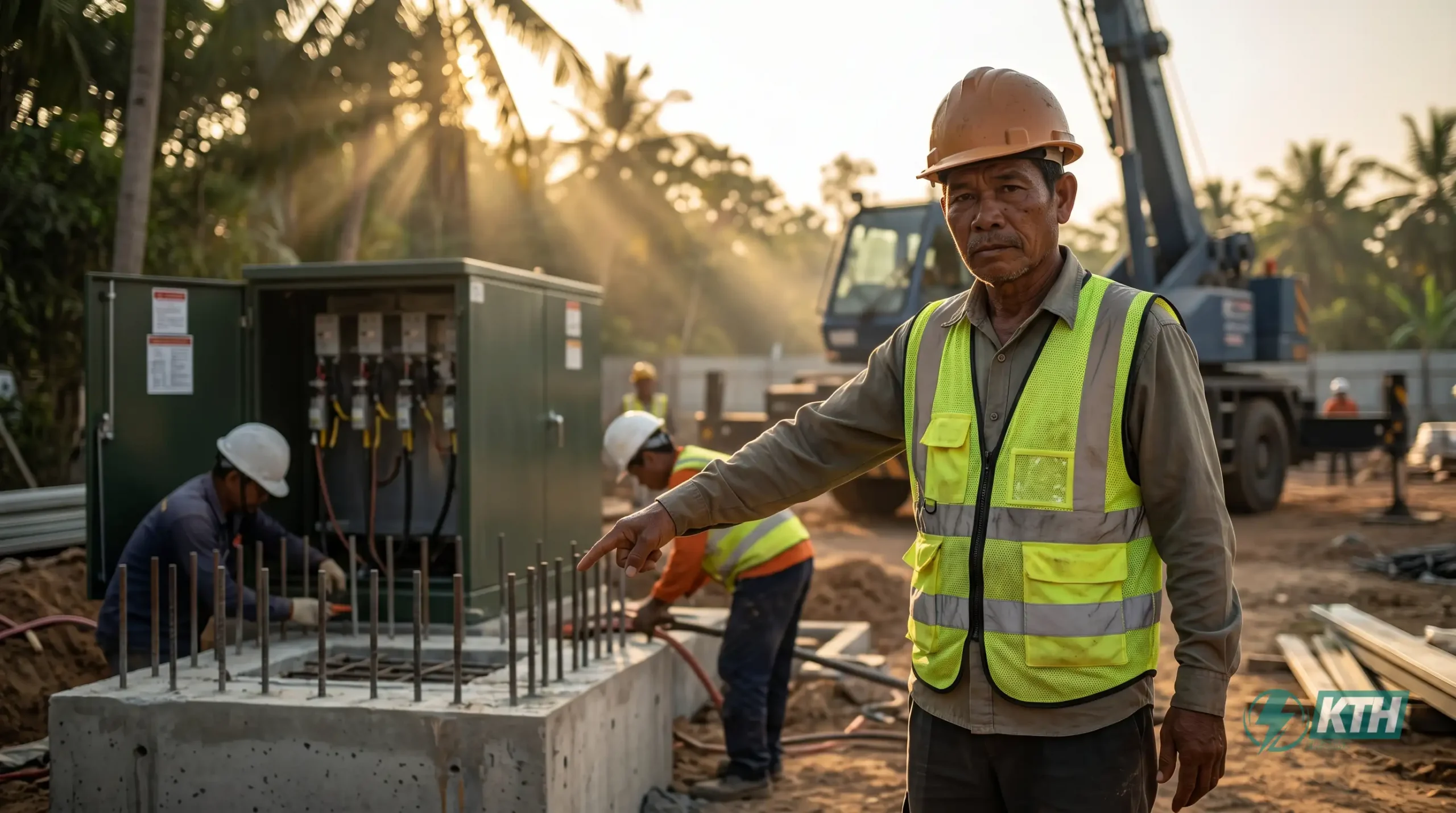
The physical foundation of your power system requires heavy civil engineering. The project scope strictly includes constructing concrete plinths, mounting package-type or pole-mounted transformers, and providing robust grounding systems.
If you are installing an outdoor pad-mounted package, the concrete plinth must be engineered to bear extreme weight and withstand wet-season flooding. For rural or light-industrial setups, pole-mounted configurations demand high-grade mechanical bracketing. Regardless of the mounting style, the grounding system must achieve an ultra-low resistance rating to protect both the equipment and personnel from deadly fault currents.
Commissioning Procedures: Load Testing, Oil Analysis, And Thermal Imaging

You do not just turn the power on and walk away. The final and most critical phase before grid activation is testing and commissioning.
This phase acts as your final insurance policy against equipment failure. It includes:
- Load Testing: Simulating peak operational demand to ensure the transformer and Main Distribution Boards (MDB) do not overheat or trip.
- Oil Analysis: For oil-immersed transformers and liquid-filled units, testing the dielectric strength of the insulating oil is mandatory to detect moisture or contamination prior to energization.
- Thermal Imaging: Utilizing advanced infrared cameras to scan for loose connections or hot spots across the MV/LV switchgears under active load.
- Safety Clearance: Submitting the final test reports to the EDC to receive the green light for official grid activation.
Who Are The Top MEP Electrical Contractors For Substation Projects In Cambodia?
Let me be entirely candid: the success or catastrophic failure of your electrical infrastructure does not just depend on the brand of transformer you buy. It depends entirely on the people installing it. You cannot hand a multi-million-dollar high-voltage project to a general contractor and expect it to pass national compliance checks.
In Cambodia, turnkey installation services for substations, cabling, and switchboards are handled by licensed, specialized electrical engineering firms. After two decades in this industry, I have seen which companies consistently deliver on time and which ones leave developers stranded with failed grid connections. If you want seamless execution, several specialized MEP and electrical contractors provide comprehensive supply, installation, and commissioning services for power transformers (MV/LV).
Here are the heavyweights dominating the market:
LICA Cambodia Co., Ltd: Ring Main Units (RMU) And Automatic Recloser Supply
If you are developing a project in the capital, local logistical strength is a massive advantage. LICA Cambodia Co., Ltd is located in Khan Sen Sok, Phnom Penh. They do not just drop off equipment; they provide end-to-end supply and installation of power transformers, Ring Main Units (RMU), automatic reclosers, and MV/LV power line systems. When you are dealing with frequent grid fluctuations, having a contractor that understands exactly how to properly calibrate automatic reclosers to protect your internal network is absolutely invaluable.
CE&P Corporation Ltd: Industrial High-Voltage Grid Integration
For developers building massive manufacturing facilities or mixed-use towers, you need an engineering firm capable of looking at the macro picture. CE&P Corporation Ltd (MEP Solutions) is known for full-scale commercial and industrial MEP contracting. Their highly specialized engineering teams handle everything from detailed MV/LV substation design to transformer installation and complex high-voltage grid integration. They are the firm you call when your project has zero margin for error.
Legrand Cambodia: Localized Support And High-Efficiency Transformer Solutions
Legrand is a globally recognized entity, and their presence in Cambodia offers a distinct advantage for developers prioritizing long-term energy efficiency. Legrand Cambodia offers high-efficiency dry-type and liquid-filled transformers, specifically their renowned GreenT series. What sets them apart is their robust localized support for installation, commissioning, and crucial thermal imaging diagnostics. If you are building a high-end commercial indoor substation where fire safety is paramount, their dry-type units are the gold standard.
EKG (Cambodia) Co., Ltd: Commercial Indoor Substation Transformer Replacement
Industrial complexes have unique, heavy-duty power demands that require specific engineering approaches. EKG (Cambodia) Co., Ltd specializes precisely in high-voltage step-down transformer installations for industrial complexes and commercial buildings across the country. Whether you are setting up a brand-new pad-mounted package or urgently replacing an aging indoor substation unit, EKG possesses the localized inventory and technical workforce to execute rapid deployments.
How To Execute Turnkey Installation Services For Commercial And Industrial Facilities?
Knowing who to hire is only half the battle. Understanding how these turnkey installation services must be executed ensures you maintain tight control over your project timeline and budget. A true turnkey solution means the contractor manages the entire lifecycle, absorbing the technical risk so you don’t have to.
Integrating Main Distribution Boards (MDB) And MV/LV Switchgears
A transformer without a properly integrated distribution board is a massive liability. The supply phase of a turnkey contract involves meticulously sourcing high-voltage step-down transformers, Main Distribution Boards (MDB), and switchgears.
Your engineering firm must ensure that the MDB is perfectly rated to handle the secondary output of the transformer. In commercial buildings, this means flawlessly integrating MV/LV switchgears that can instantly isolate short circuits. If the switchgear integration is sloppy, a localized fault in your facility can cascade, potentially blowing out your main transformer and shutting down your operations for weeks.
Implementing Grounding Systems For Pad-Mounted Package Substations
Do not overlook the civil engineering aspect of electrical work. The physical grounding of your high-voltage equipment is a matter of life and death. Turnkey contractors are responsible for critical civil and mechanical works, which involve constructing concrete plinths, mounting package-type or pole-mounted transformers, and providing grounding systems.
Whether your transformer is sitting on a reinforced concrete pad outside a factory or suspended on a reinforced pole, the grounding system must be driven deep enough into the soil to achieve near-zero resistance. This safely dissipates lightning strikes and internal electrical faults directly into the earth, entirely bypassing your sensitive industrial machinery.
Managing End-To-End Supply Chain For Step-Down Transformer Placement
The logistics of physically moving a 5-ton step-down transformer through the congested streets of Phnom Penh or out to a remote Special Economic Zone requires military-level precision. Turnkey contractors absorb this headache. They handle the specialized craning, the exact placement onto the pre-cured concrete plinths, and the heavy-duty mechanical bolting. Once placed, they initiate the rigorous testing and commissioning protocols—such as load testing and oil analysis—to secure the final safety clearance before grid activation.
Frequently Asked Questions (FAQs) About Transformer Installation in Cambodia
To help project investors and facility managers navigate the technical hurdles of the Cambodian energy sector, I have compiled answers to the most urgent questions based on direct field experience.
Q: Do I need to buy the transformer before talking to Electricité du Cambodge (EDC)?
A: Absolutely not. Doing so is a massive financial risk. The design and permitting phase requires drafting layouts and securing EDC approval for grid connections before any equipment is purchased. If you buy a unit that the EDC deems incompatible with the local grid capacity, they will deny your connection permit.
Q: What exact electrical standards must my imported equipment meet?
A: If you are sourcing equipment internationally, you must ensure strict adherence to local MV/LV electrical standards, which are strictly regulated at 230V/400V, 50Hz. Equipment rated for 60Hz will not function safely on the Cambodian grid.
Q: What safety tests are legally required before turning the power on?
A: Before the EDC grants safety clearance and allows grid activation, your contractor must perform rigorous testing and commissioning, which explicitly includes load testing and oil analysis. Legrand Cambodia, for instance, also utilizes thermal imaging to ensure there are no dangerous hotspots in the system.
Q: Are there local contractors capable of handling complex substation projects?
A: Yes. The market is highly developed. Firms like CE&P Corporation Ltd are known for full-scale commercial and industrial MEP contracting, handling everything from MV/LV substation design to high-voltage grid integration. Likewise, EKG (Cambodia) Co., Ltd specializes in installations for substation projects across the country.

REVIEWED BY:
DR. KHUONG NGUYEN-VINH
✓ Verified Expert
Dr. Khuong Nguyen-Vinh is a Lecturer in Electronic & Computer Systems Engineering at RMIT University Vietnam, dedicated to bridging the gap between advanced theory and practical energy solutions.
With a Ph.D. in Electrical Power Engineering from VSB – Technical University of Ostrava, his research focuses on intelligent control systems for renewable energy, including AI-driven fault detection for solar panels and optimized MPPT algorithms.
💡
Expert Commitment:
“A committed educator, Dr. Khuong mentors the next generation of engineers in power electronics, embedded systems, and sustainable technology integration for Industry 4.0.”